

Refrigerator Compressor Repair: Signs, Costs and Repair vs. Replace
Clicking, humming, running nonstop or not running at all — here’s how to tell if the compressor is really the problem and what a repair involves.
What the compressor does
The compressor is the pump of your refrigerator’s sealed system. It squeezes refrigerant vapor into a hot, high-pressure gas, which releases heat through the condenser coils, then passes through a tiny capillary tube into the evaporator, where it expands and absorbs heat from inside the cabinet. Most refrigerators sold in the US today use R-600a (isobutane); many older units use R-134a. If the compressor stops pumping, nothing gets cold.
Signs of a compressor problem
- Clicking every few minutes. A click, a short hum and then silence usually means the compressor is trying to start and the overload is shutting it off. The start relay is often to blame, which is a much cheaper repair.
- Humming but not running. The compressor gets power but can’t turn over.
- Running constantly. Long, nonstop cycles with poor cooling can mean a weak compressor, a refrigerant leak or a condenser problem.
- Loud knocking or grinding. Internal mechanical wear, especially if it’s new and getting worse.
- Very hot to the touch with no cooling. Some heat is normal; a compressor too hot to touch for long, alongside a warm cabinet, is not.
Not every noise is a compressor fault. Gurgling and hissing are usually refrigerant flowing normally, and a buzz from the back can be the water inlet valve filling the ice maker. Squealing that gets louder when you open the freezer door usually comes from the evaporator fan.
Start relay vs. compressor: why it matters
A start relay or overload protector is a small part plugged onto the side of the compressor. It costs far less than a compressor and is a common cause of clicking and no-start symptoms. A good technician tests the relay, the overload and the compressor windings before recommending a compressor replacement. If someone wants to replace the compressor without testing those first, ask why.
Who can repair a compressor
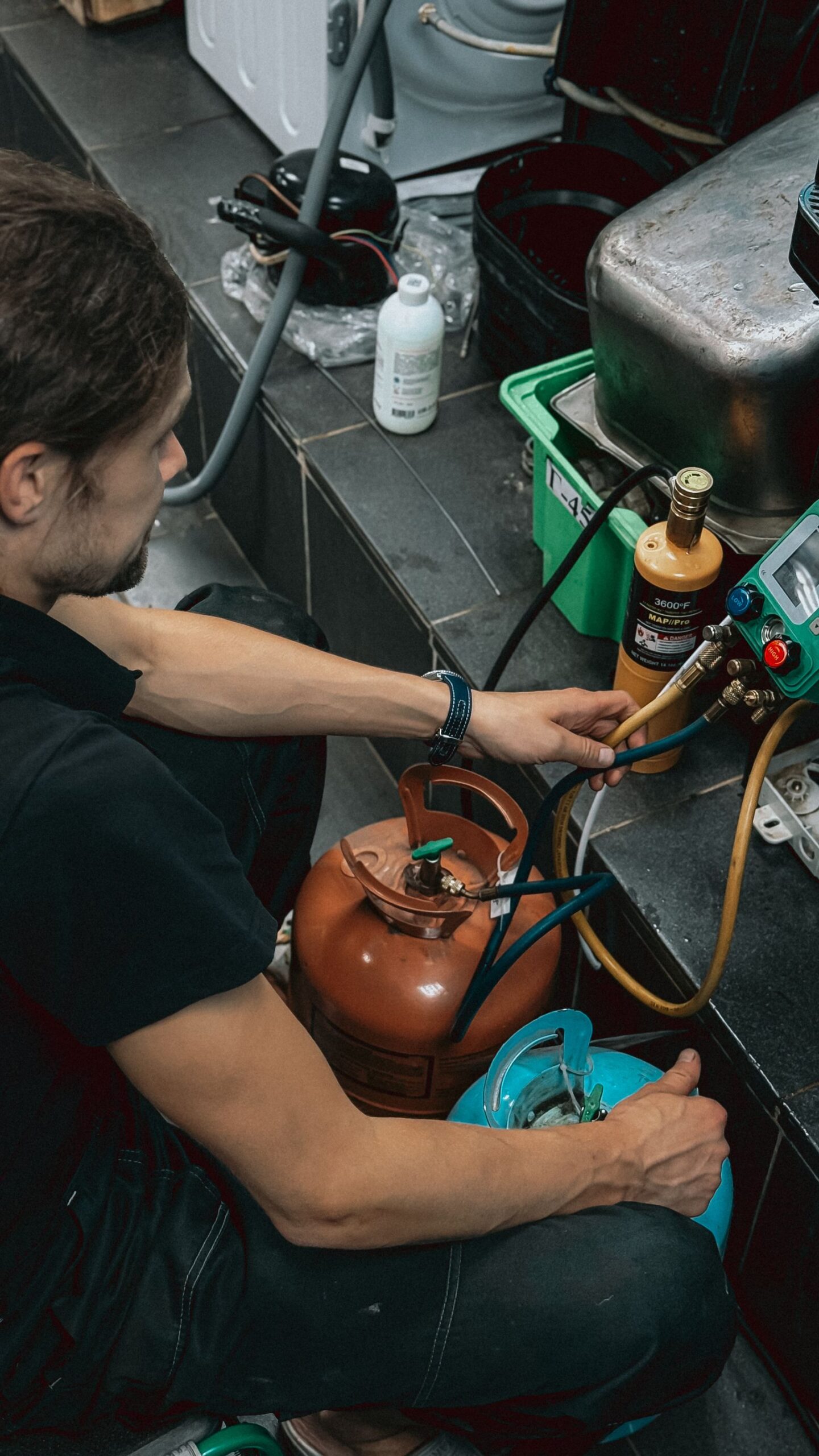
Replacing a compressor means opening the sealed system, recovering the refrigerant, brazing in the new compressor and a new filter-drier, pulling a vacuum and recharging. Under Section 608 of the Clean Air Act, technicians who open refrigerant circuits must hold EPA Section 608 certification; household refrigerators fall under the Type I category. Ask the technician to confirm they’re certified before sealed-system work.
Compressor replacement cost and when to replace the fridge
| Repair | Typical cost |
|---|---|
| Start relay or overload | $100–$250 |
| Condenser fan motor | $150–$300 |
| Compressor replacement (sealed system) | $500–$1,200+ |
| Refrigerant leak repair and recharge | $600–$1,200 |
Check your warranty first. Many manufacturers cover the sealed system, and sometimes the compressor part, for longer than the standard one-year warranty — some for five to ten years. If you’re out of warranty and the fridge is over about 10 years old, a new refrigerator is often the better value. Our cost guide walks through the 50% rule.
Get refrigerator compressor repair near you
Refrigerator Repair Help technicians work in these cities and their suburbs. Pick yours for local coverage, neighborhoods and FAQs.
San Antonio, TX
Stone Oak, Alamo Heights, Helotes, Schertz and more.
Houston, TX
The Heights, Memorial, Katy, Sugar Land, Pearland.
Dallas, TX
Uptown, Lakewood, Preston Hollow, Plano, Richardson.
Los Angeles, CA
Westside, Silver Lake, Sherman Oaks, Encino, Pasadena.
San Diego, CA
La Jolla, Pacific Beach, North Park, Chula Vista.
Chicago, IL
Lincoln Park, Logan Square, Hyde Park, Evanston.
Safety note: unplug the refrigerator before touching any wiring, fans or panels. Sealed-system work — anything involving refrigerant or the compressor circuit — must be done by an EPA Section 608 certified technician.
Fridge warm? Get a local technician on it.
Call Refrigerator Repair Help and we’ll get a local refrigerator technician on the job, often the same day. You’ll hear the diagnostic fee before anyone is booked.
Get Refrigerator Repair HelpFrequently asked questions
How do I know if my refrigerator compressor is bad?
Common signs are a fridge that clicks every few minutes without cooling, a compressor that hums but doesn’t run, constant running with poor cooling, or loud knocking. A technician should test the start relay and overload first, because they cause the same symptoms and cost much less.
How much does it cost to replace a refrigerator compressor?
Most compressor replacements cost about $500 to $1,200 or more, including the part, labor, refrigerant and a new filter-drier. Built-in and luxury models are at the high end.
Why is my refrigerator clicking?
A repeated click every few minutes, with a warm fridge, usually means the compressor is trying to start and the overload is tripping. The start relay is a frequent cause. A single click when the compressor cycles on or off is normal.
Can a refrigerator compressor be repaired instead of replaced?
The compressor itself is a sealed unit and is replaced rather than repaired. What can be repaired are the parts around it: the start relay, overload, capacitor (on some models), condenser fan and wiring.
Is my compressor covered by warranty?
Many manufacturers offer longer sealed-system or compressor coverage than their standard warranty. Check your owner’s manual or the manufacturer’s website with your model and serial number before paying for a replacement.