

Refrigerator Ice Maker Repair: Why It Stopped Working and How to Fix It
No ice, slow ice, hollow cubes or a bucket frozen into one block — here’s what’s going on inside your ice maker and when to call a technician.
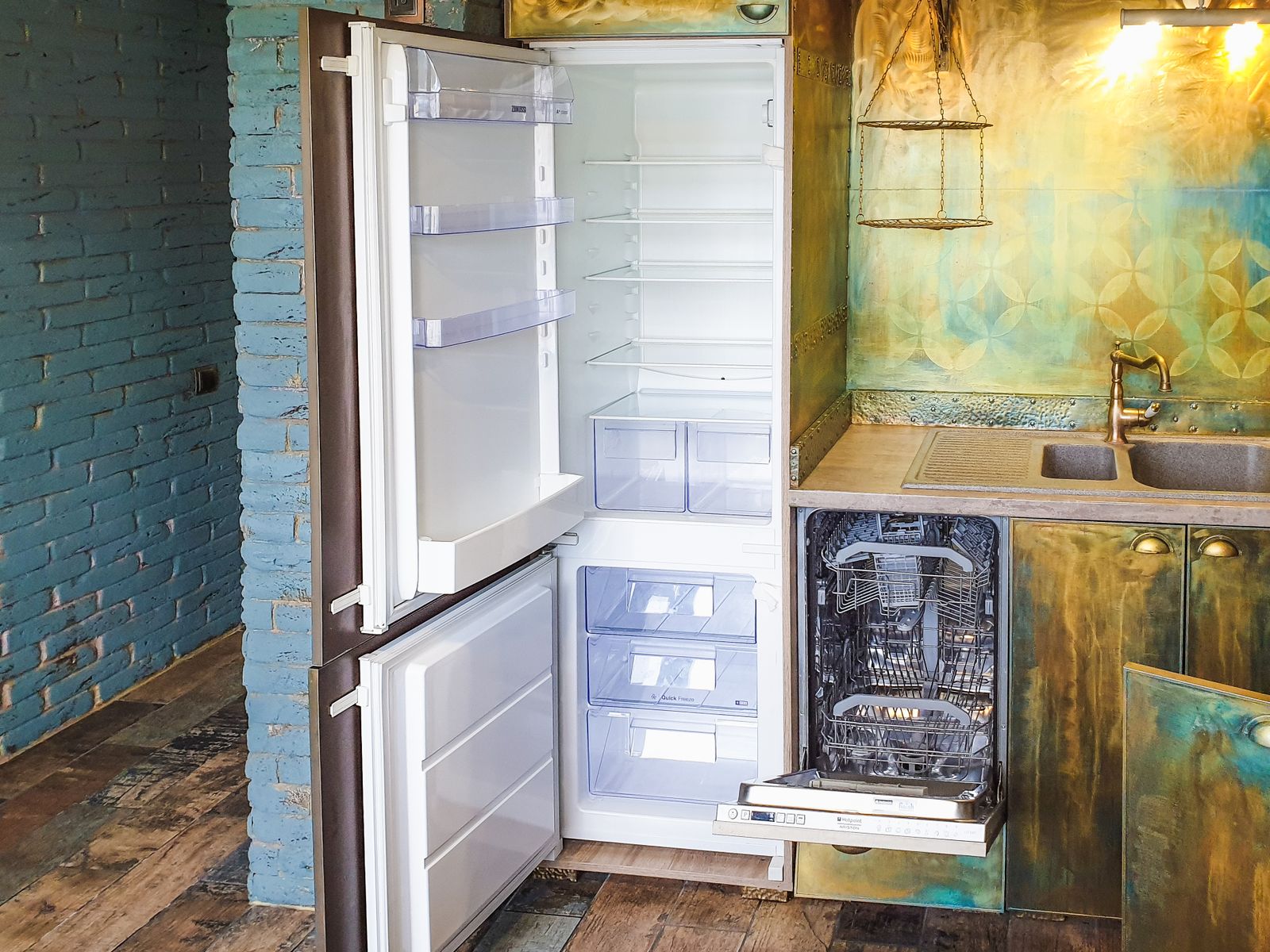
How a refrigerator ice maker works
When the ice tray is empty, the ice maker’s control opens the water inlet valve for a few seconds. Water flows up through the filter, into a small fill tube and into the tray. Once the freezer has frozen the water, a heater or twisting mechanism releases the cubes into the bucket, and the cycle repeats until a sensor or arm says the bucket is full. A failure at any step stops production.
Common reasons the ice maker isn’t working
- Clogged or old water filter. Filters restrict flow as they fill with sediment, especially in hard-water areas. Many manufacturers recommend replacing them about every six months.
- Frozen fill tube. If the valve leaks slightly or water pressure is low, a little water freezes in the tube and blocks it. You may see ice in the tube at the back of the ice maker.
- Failing water inlet valve. The valve at the back of the fridge can scale up, weaken or fail electrically. Signs include a buzzing noise with no water, or slow, small cubes.
- Low household water pressure. Most inlet valves need roughly 20 psi or more to open fully. A partly closed supply valve or a saddle valve on the water line is a common cause.
- Freezer too warm. If the freezer isn’t near 0°F, the tray never freezes enough to harvest. This points to a cooling problem — see freezer repair.
- Ice maker module or motor failure. The module can stop cycling even when water and temperature are fine.
- Shut-off arm or sensor. A raised bail arm or a blocked optical sensor tells the ice maker the bucket is full.
Ice maker problems in French-door refrigerators
Many French-door models put the ice maker in the door or in a compartment at the top of the fresh-food section. These designs are convenient but sensitive to air leaks: warm, humid air gets in around the compartment seal, condenses and freezes. The result is frost buildup, ice jammed in the chute or cubes fused into a block. Samsung and LG owners search for “ice maker not working” more than any other brands, and this frost problem is a big reason why. A technician can check the compartment seal, the fan and the defrost heater for that area.
What you can check before calling
- Make sure the ice maker switch is on and the bail arm is down.
- Replace the water filter if it’s more than six months old, and flush a few gallons through the dispenser.
- Check the freezer temperature with a thermometer; it should be close to 0°F.
- Look for ice in the fill tube. If there’s a blockage, a hair dryer on low (fridge unplugged, towels down) can clear it — but find out why it froze.
- Confirm the water supply valve behind or under the fridge is fully open and the line isn’t kinked.
Ice maker repair costs
| Repair | Typical cost |
|---|---|
| Water filter replacement | $30–$60 (part only) |
| Water inlet valve | $150–$300 |
| Ice maker module or full assembly | $200–$400 |
| Door or compartment seal / heater (French-door) | $150–$350 |
Angi puts the average ice maker repair at around $330. Full ranges and repair-versus-replace advice are in our cost guide.
Get ice maker repair near you
Refrigerator Repair Help technicians work in these cities and their suburbs. Pick yours for local coverage, neighborhoods and FAQs.
San Antonio, TX
Stone Oak, Alamo Heights, Helotes, Schertz and more.
Houston, TX
The Heights, Memorial, Katy, Sugar Land, Pearland.
Dallas, TX
Uptown, Lakewood, Preston Hollow, Plano, Richardson.
Los Angeles, CA
Westside, Silver Lake, Sherman Oaks, Encino, Pasadena.
San Diego, CA
La Jolla, Pacific Beach, North Park, Chula Vista.
Chicago, IL
Lincoln Park, Logan Square, Hyde Park, Evanston.
Safety note: unplug the refrigerator before touching any wiring, fans or panels. Sealed-system work — anything involving refrigerant or the compressor circuit — must be done by an EPA Section 608 certified technician.
Fridge warm? Get a local technician on it.
Call Refrigerator Repair Help and we’ll get a local refrigerator technician on the job, often the same day. You’ll hear the diagnostic fee before anyone is booked.
Get Refrigerator Repair HelpFrequently asked questions
Why is my refrigerator ice maker not making ice?
The most common causes are a clogged water filter, a frozen fill tube, a failing water inlet valve, low water pressure, a freezer warmer than about 0°F or a worn ice maker module. Check the filter and freezer temperature first.
Why is my Samsung ice maker not working?
Many Samsung French-door refrigerators have the ice maker in the fresh-food door or compartment, where humid air can cause frost to build up and jam the mechanism. A technician can check the compartment seal, fan and heater. Clogged filters and frozen fill tubes are also common.
How long does it take a new ice maker to make ice?
Most new or reset ice makers take about 24 hours to produce the first full batch, and you should discard the first few batches. If there’s no ice after a day, something else is wrong.
Is it worth repairing an ice maker?
Usually. Ice maker repairs typically cost a few hundred dollars, far less than a new refrigerator. If the fridge itself is old and also has cooling problems, it may be time to replace it.
Can a bad water filter stop the ice maker?
Yes. A clogged filter reduces water flow, which leads to small, hollow or no cubes. Replace it on schedule, especially in hard-water areas such as San Antonio, Los Angeles and San Diego.